Dark skies
Dark skies and stargazing from an Isle of Wight campsite
Where the skies are darkest, the best months for the Milky Way and meteor showers, and the campsites with the least light pollution.
In short: the darkest skies on the Isle of Wight are in the south-west and the West Wight, away from the towns and with nothing but the Channel to the south. The Island doesn't currently hold an International Dark Sky designation, though there has been a long-running bid for one in the south-west. Come between late summer and early spring, on a night near the new moon, and pick one of the 16 campsites we list as good for dark skies.
Where the skies are darkest
The Isle of Wight sits just south of a bright mainland. Portsmouth, Southampton and the Solent towns put a glow on the northern horizon that you can see from almost anywhere on the Island, and Newport, Ryde, Cowes and the Sandown Bay towns add their own. The trick is to put the Island's hills between you and the lights, and look south.
That makes the Back of the Wight, between Brook and Chale, the best part of the Island for stars. The downs behind it block much of the glow from the north, the farmland is thinly lit, and to the south there is only sea. The West Wight around Brighstone, Calbourne, Shalfleet and Freshwater is also dark, and so are the farms in the valleys inland around Godshill and Whitwell. The east of the Island and the north coast are the brightest.
Is the Isle of Wight a Dark Sky Reserve?
No, not at the time of writing. The Isle of Wight Council and the Vectis Astronomical Society have worked for years towards International Dark Sky Park status for the south-west of the Island, roughly between Freshwater, Chale and the edge of Newport, within the Isle of Wight National Landscape (formerly the AONB). An earlier application was turned down, largely over street lighting, and in 2021 the council backed a fresh bid, with money set aside to replace the brightest street lights. If it succeeds, the south-west would join the handful of dark sky parks in England. Until then, no part of the Island is an officially certified dark sky place.
The Island does have Dark Sky Discovery Sites, publicly accessible places picked as good spots for stargazing; the car park at Fort Victoria Country Park near Yarmouth is one. The whole Island is also a UNESCO Biosphere Reserve, but that designation is about people and nature in general, not night skies.
The best months, and the best nights
The Island is far enough south that the summer nights are short, and around midsummer the sky never gets fully dark: from late May to mid-July there's a glow to the north all night. For proper darkness:
- August to October: the best compromise for campers. Nights are long enough to be fully dark by late evening, it's still mild, and the Milky Way is overhead, with its brightest part low in the south after dark in August and September. A south-facing clifftop on the Back of the Wight is ideal for it.
- November to February: the longest, darkest nights and the winter constellations: Orion, Taurus with the Pleiades, and Gemini. Cold and often cloudy, so this is the time for a heated glamping unit with a wood burner to retreat to. See out-of-season camping.
- March and April: dark by mid-evening, quiet campsites reopening, and the spring galaxies for anyone with a telescope.
Whatever the month, the moon matters more than anything else. A bright moon washes out all but the brightest stars, so aim for the week either side of a new moon, and check the moonrise time for the night you're going out.
Meteor showers
Meteor showers are the easiest way into stargazing: no kit, just a reclining chair, a sleeping bag and patience. The main ones from the Island:
| Shower | Peaks around | Notes |
|---|---|---|
| Quadrantids | Early January | Strong but short peak; cold. |
| Lyrids | Late April | Modest; a good excuse for an Easter camp. |
| Perseids | Mid-August | The summer favourite: warm nights, plenty of meteors, best after midnight. |
| Orionids | Late October | Fast meteors; can fall in the Island's October half term. |
| Geminids | Mid-December | Usually the year's richest shower, and visible from mid-evening. |
Peak nights move a day or so each year, and the moon decides whether a shower is good or poor, so check the forecast for the year you're going. In August, the Perseids coincide with the busiest weeks on Island campsites, so book a dark site early.
Let your eyes adjust. It takes 20 to 30 minutes for your eyes to adapt fully to the dark, and one glance at a white phone screen undoes it. Use a red torch or the red-light mode on a head torch, and turn your screen brightness right down.
Campsites with dark skies
We flag a campsite as good for dark skies when it is unlit or in a notably dark spot, or when the campsite itself says so. There are 16 of them, listed under dark-sky campsites. A few worth knowing:
- Chine Farm at Atherfield: a large clifftop field on the Military Road between Brighstone and Chale, known for quiet nights and very dark skies, with the sea to the south.
- Brighstone Holiday Centre: clifftop camping fields on the same coast.
- Meadow Lakes at Limerstone: a lakeside members' site with low light pollution (no dogs).
- Mill Heights at Calbourne: a simple field with views to the sea, very little light pollution, and open all year.
- Camp Wight near Shalfleet: woodland pitches on a deliberately unlit site, also open all year. Bring a head torch.
- Puckaster Cove Hideaway at Niton: sea-view yurts on the southern tip of the Island, including one marketed as the Stargazers' Retreat, with a clear dome over the shower.
- Moor Farm Yurt near Godshill: a single yurt with a glass-roofed shower pod for looking up.
- Nature's Haven near Havenstreet: a small adults-only woodland site, a dark pocket in the north of the Island.
Beyond this list, most small farm campsites and small sites have little or no lighting. Big holiday parks are the brightest places to camp, with lit roads and clubhouses. If dark skies matter, ask the campsite whether its paths and toilet block are lit all night, and pick a pitch away from them.
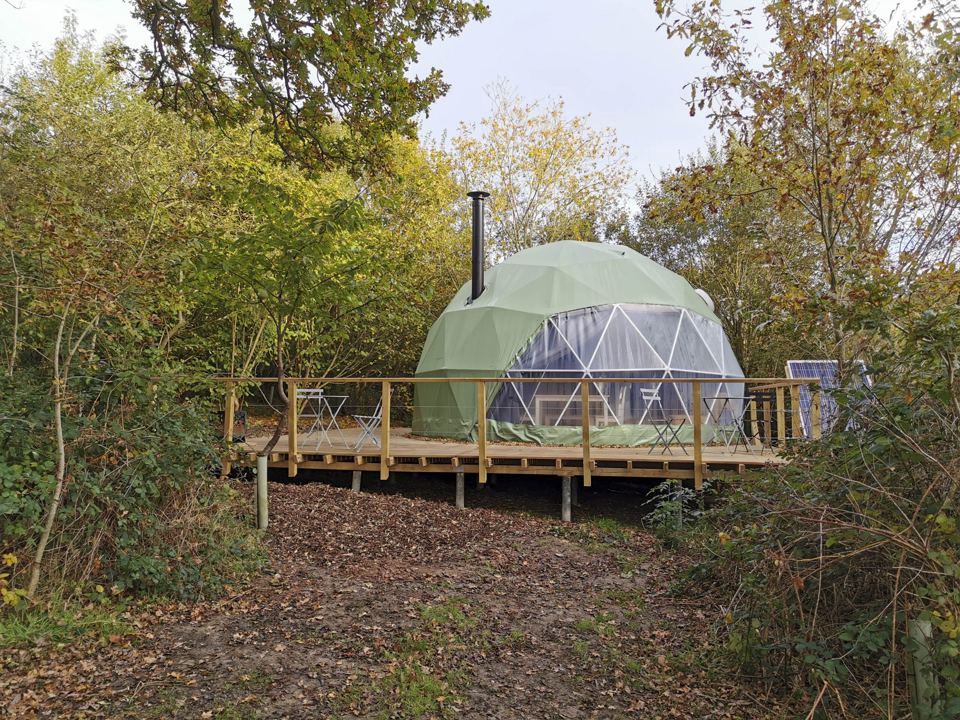
Campsite · Shalfleet
Camp Wight
Tents, caravans, motorhomes, pods, pre-pitched tents
- Dogs welcome
- Campfires
- Glamping
from £20/night
View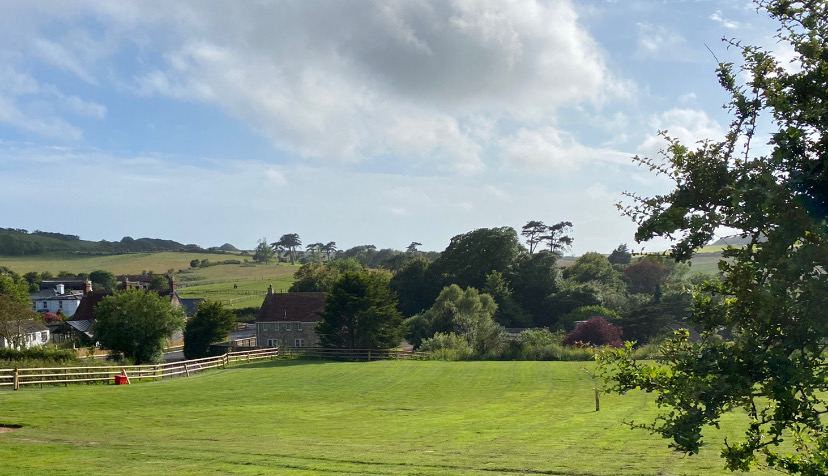
Campsite · Totland
Stoats Farm Caravan and Camping
Tents, caravans, motorhomes, cottages
- Dogs welcome
- Campfires
- Near beach
from £24.50/night
View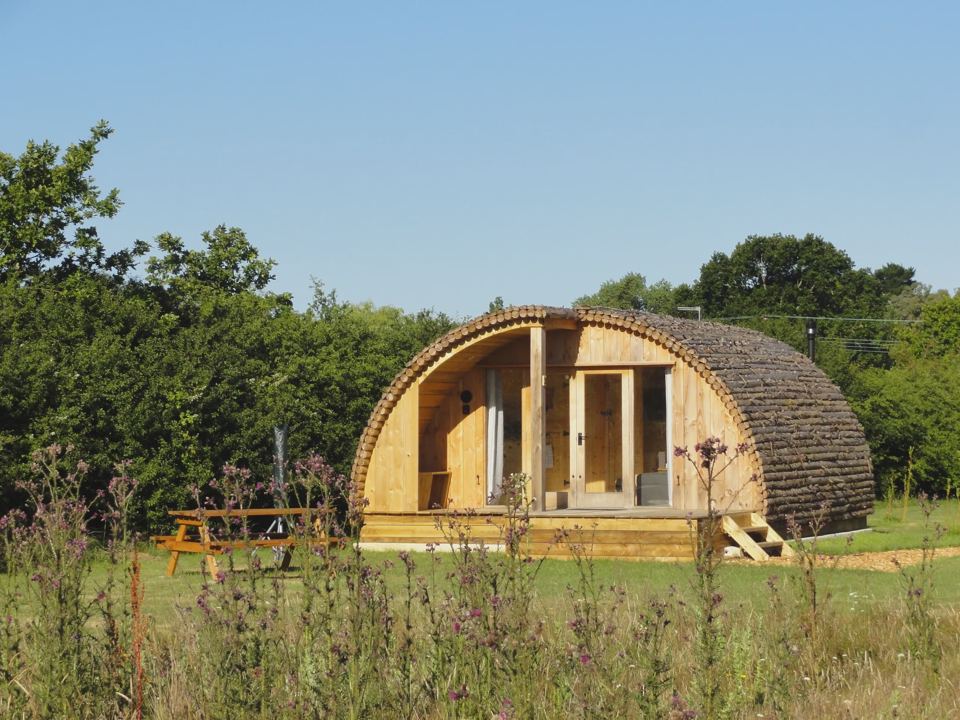
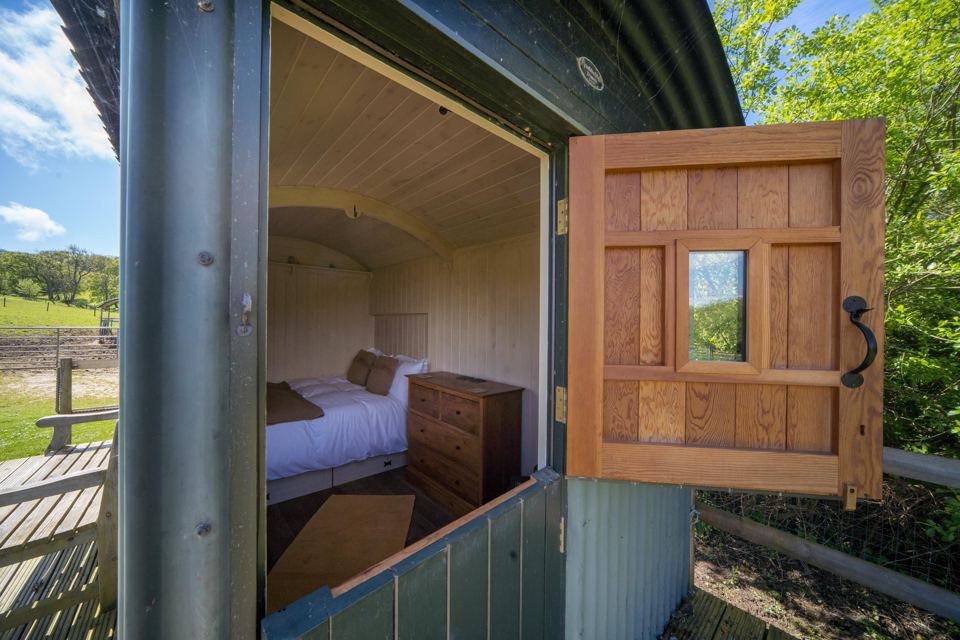
Glamping site · Godshill
The Hut at Godshill Park Farm
Shepherd's huts
- No dogs
- Glamping
from £70/night
View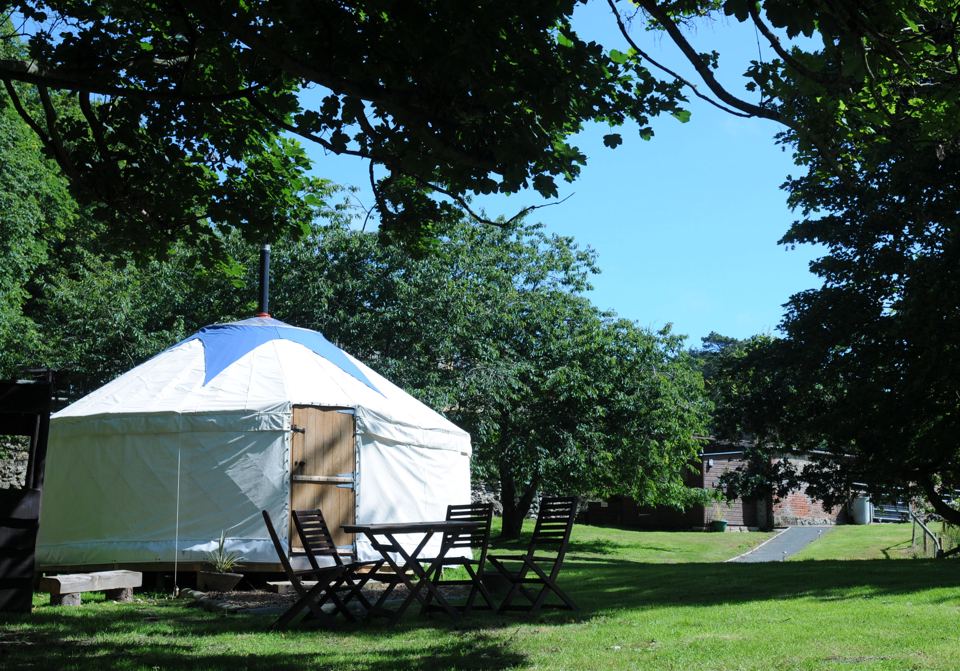
Glamping site · St Lawrence
Bank End Farm Yurts
Yurts
- No dogs
- Near beach
- Glamping
from £71.43/night
View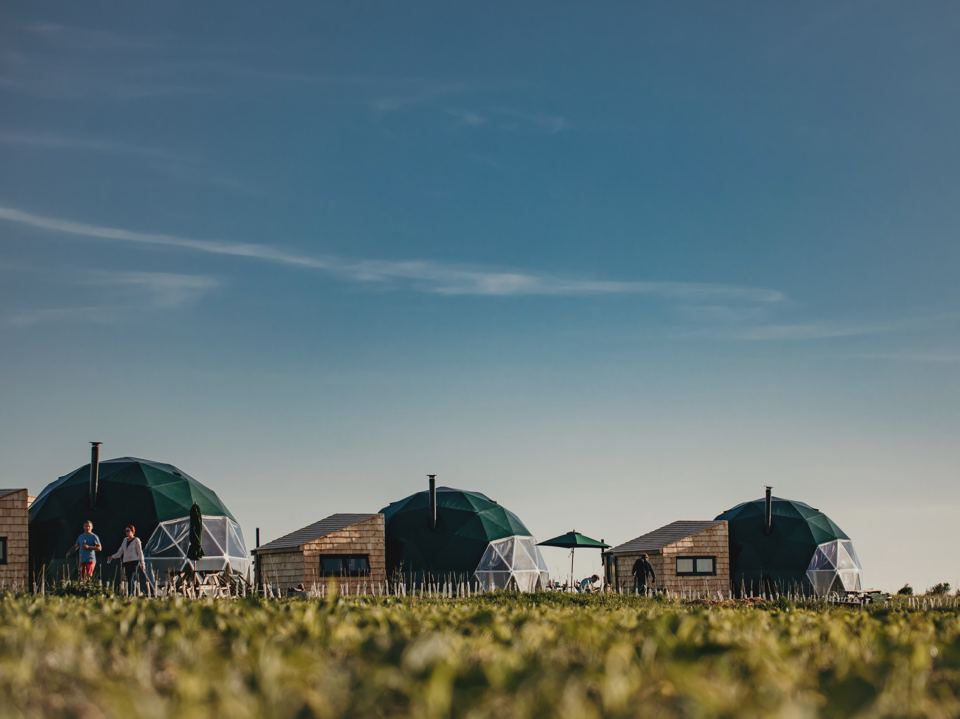
Glamping site · Yarmouth
Tapnell Farm Glamping (Tom's Eco Lodge & Camp Tapnell)
Safari tents, cabins, pods, chalets, lodges
- Some dogs
- Campfires
- Glamping
from £125/night
ViewSpots to stargaze away from the campsite
- The downs: Brighstone Down, Mottistone Down and Tennyson Down rise above the light and give huge skies. Go up before dark so you know the path, and take care near the cliffs on Tennyson.
- St Catherine's Down above Niton and Chale, with the medieval Oratory (the "Pepperpot") as a foreground for night photography.
- The Military Road between Brook and Chale has car parks, including the National Trust one at Compton Bay, with views straight out to sea. Park safely and head back to your pitch afterwards: overnight sleeping in vehicles is banned in council car parks (see wild camping).
- Fort Victoria Country Park near Yarmouth, the Dark Sky Discovery Site.
If you'd like to look through a telescope with someone who knows the sky, the Island's astronomy club, the Vectis Astronomical Society, is the place to ask. A campfire and stars go well together: see campfires and BBQs for which sites allow fires, and the Back of the Wight and West Wight guides for the darkest corners.
Questions people ask
Is the Isle of Wight a Dark Sky Reserve?
No. The Island has no International Dark Sky Reserve or Park designation at the time of writing, though the council and the Vectis Astronomical Society have pursued Dark Sky Park status for the south-west of the Island. It does have Dark Sky Discovery Sites, such as Fort Victoria Country Park.
Where is the best place for stargazing on the Isle of Wight?
The south-west and West Wight, especially the Back of the Wight between Brook and Chale and the downs above it, where hills block the mainland's glow and there is only sea to the south.
When can you see the Perseids from the Isle of Wight?
The Perseids peak around the middle of August, with the best rates after midnight. Pick a dark, south-facing campsite on the Back of the Wight and check the moon phase for that year.
Can you see the Milky Way from the Isle of Wight?
Yes, from the darker south-west of the Island on a clear, moonless night. Its brightest part is low in the south after dark in August and September.
Which Isle of Wight campsites have dark skies?
16 of the campsites we list are good for dark skies, mostly small unlit sites in the south-west and West Wight, such as Chine Farm at Atherfield, Mill Heights at Calbourne and Camp Wight near Shalfleet.