Fossils
Fossil hunting and dinosaur footprints, and where to camp
Compton's footprints, Yaverland and Hanover Point, the rules on collecting, tide safety and the campsites nearest the best beaches.
In short: the Isle of Wight is one of the best places in Europe to find dinosaur remains. The two classic spots are Compton Bay and Hanover Point in the West Wight, where you can see dinosaur footprints at low tide, and Yaverland at the north end of Sandown Bay, next to the Dinosaur Isle museum. Collect only loose fossils from the beach, never dig into the cliffs, and plan every visit around the tide. Campsites are within walking distance of both.
Why the Island is Dinosaur Island
The rocks along the south-west coast between Compton and Atherfield, and again at Yaverland, are Early Cretaceous: muds and sands laid down by rivers and floodplains around 125 to 130 million years ago, when dinosaurs such as Iguanodon walked the area. The cliffs are soft and erode quickly, so every winter's storms bring down fresh material and wash new fossils on to the beach.
That constant erosion is why the Island keeps producing finds, including new species described in recent decades, and why amateurs with sharp eyes still make important discoveries. Most of what you'll find is smaller: fragments of bone, fossil wood, shells and teeth.
Compton Bay and Hanover Point
Compton Bay is the best-known fossil beach on the Island and a fine beach in its own right. At its eastern end, Hanover Point juts out between Compton and Brook. Here, at low tide, you can see the famous dinosaur footprints: not dents in the rock, but natural casts, the rounded three-toed lumps of sediment that filled prints made in soft mud and were left standing when the softer rock around them wore away.
Also at Hanover Point, the Pine Raft is a jumble of fossilised logs on the foreshore, the remains of trees washed down an ancient river. Along both Compton and Brook, look in the shingle for small, dark, heavy pieces of dinosaur bone, often with a honeycomb texture on a broken face.
- Go at low tide, ideally on a falling tide, and leave plenty of time to get back.
- The footprint casts are best seen when the sand has been scoured off by recent rough weather.
- Look, photograph and measure the footprints, but don't hammer them, climb on them or try to take any.
Campsites nearby: Compton Farm is a short walk from the beach, Chapelfurlong Farm (a summer pop-up field) is about 25 minutes' walk from Brook, and Tapnell Farm is under two miles from Compton Bay. See all campsites near Compton Bay and near Brook.
Brighstone to Atherfield
East of Brook, the same rocks run along the Back of the Wight past Brighstone Bay and Grange Chine. Bone fragments and fossil wood turn up all along this stretch, and the beaches are much quieter than Compton. Further east, around Atherfield, the rocks change to the slightly younger Lower Greensand, with marine fossils such as ammonites and other shells.
Access is down the chines, which change as the cliffs slip, so check the path is open before you go. Grange Farm has a path to the beach below the site and Brighstone Holiday Centre is under half a mile from Grange Chine; at Atherfield, Chine Farm and Warren Hill Camp are about a mile from the beach. See the Back of the Wight guide for this coast.
Yaverland and Dinosaur Isle
On the other side of the Island, the cliffs at Yaverland, between Sandown and Culver Down, expose the same dinosaur-bearing rocks. It's an easier fossil beach for families than Compton, with a car park by the beach and Sandown's cafés and facilities along the seafront. Bone fragments and plant fossils turn up at the foot of the cliffs, and footprint casts appear on the foreshore at low tide.
Dinosaur Isle, the museum on the seafront between Sandown and Yaverland, is the place to start. Its galleries hold dinosaur skeletons and finds from the Island, and it runs guided fossil walks, especially in the school holidays, which need booking. A walk with someone who knows what they're looking at is the quickest way to learn to spot bone in the shingle. Check the museum's website for opening times and walk dates.
The nearest campsites are Sunrise Hill at Brading and Adgestone near Sandown, with the big parks at Whitecliff Bay on the far side of Culver Down. See campsites near Dinosaur Isle and near Yaverland.
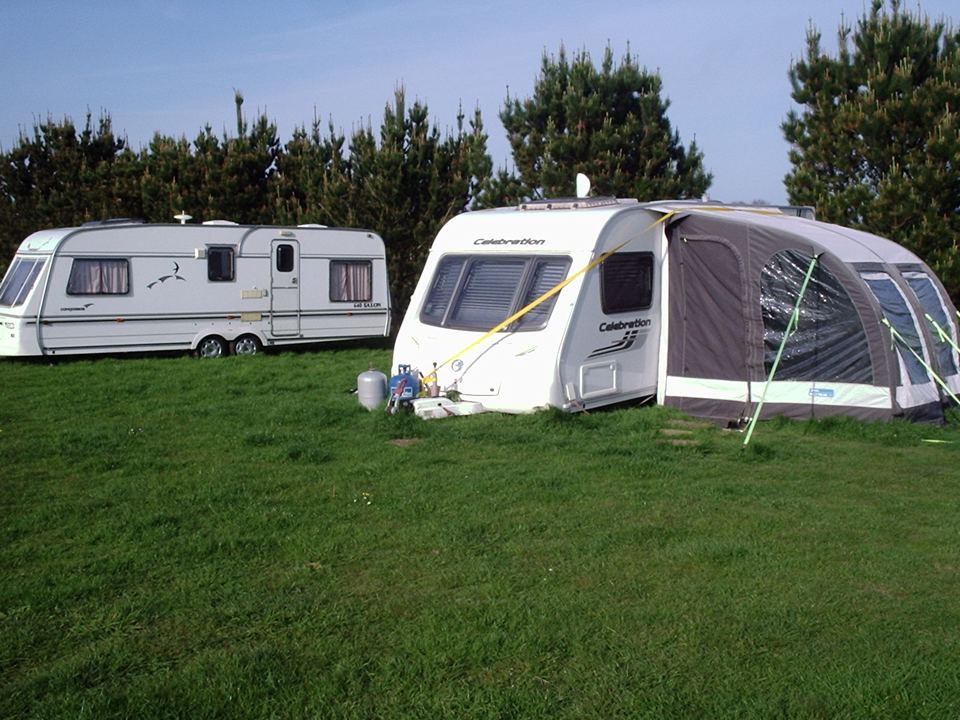
Small certificated site · St Helens
Fakenham Farm CS
Tents, caravans, motorhomes
- Dogs welcome
- Near beach
from £15/night
View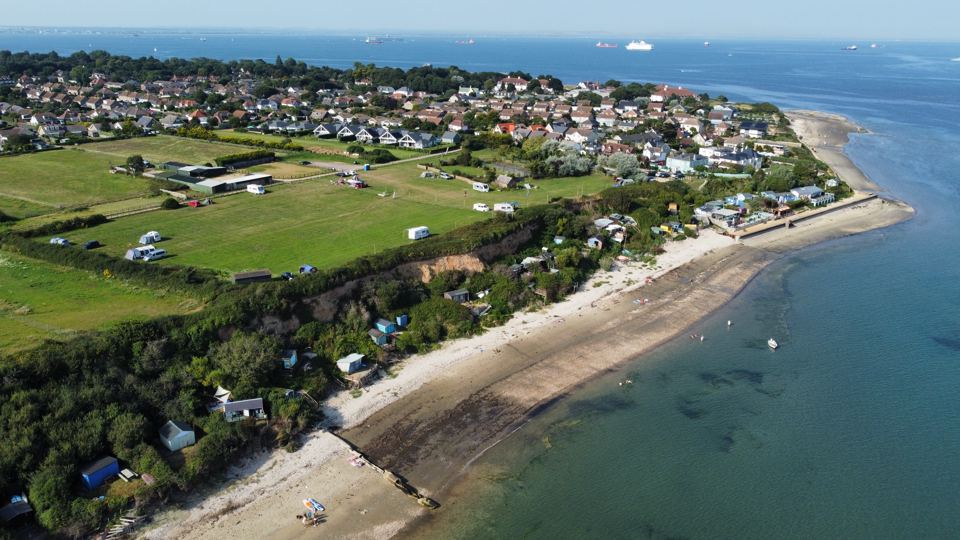
Pop-up campsite · Bembridge
Forelands Pop-Up Campsite
Tents, motorhomes
- Dogs welcome
- Campfires
- Near beach
from £15/night
View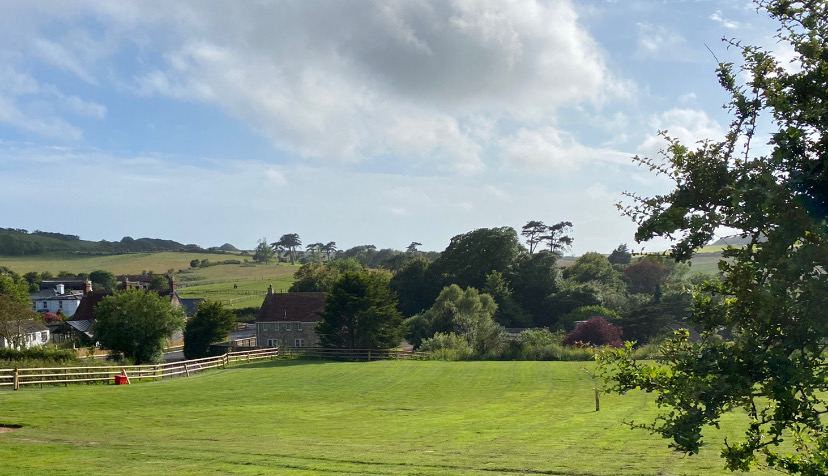
Campsite · Totland
Stoats Farm Caravan and Camping
Tents, caravans, motorhomes, cottages
- Dogs welcome
- Campfires
- Near beach
from £24.50/night
View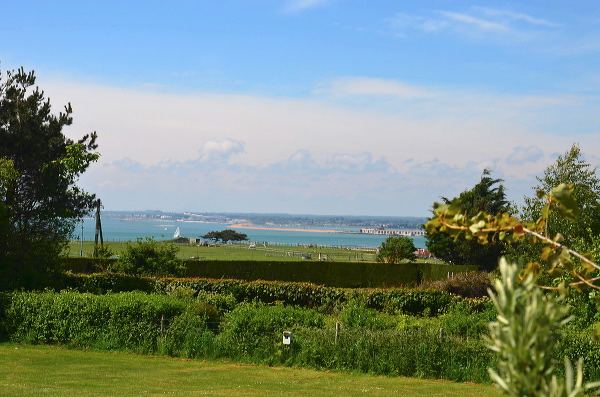
Touring park · Freshwater
Heathfield Farm Camping
Tents, caravans, motorhomes
- Dogs welcome
- Near beach
from £28/night
View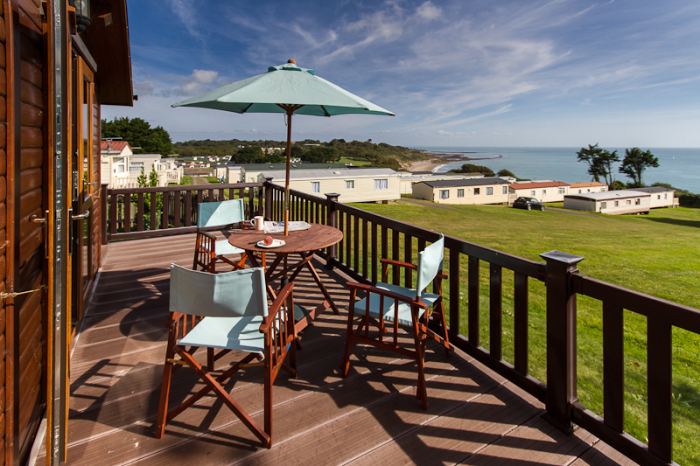
Holiday park · Bembridge
Sandhills Holiday Park
Static caravans, lodges
- No dogs
- Near beach
from £69.29/night
View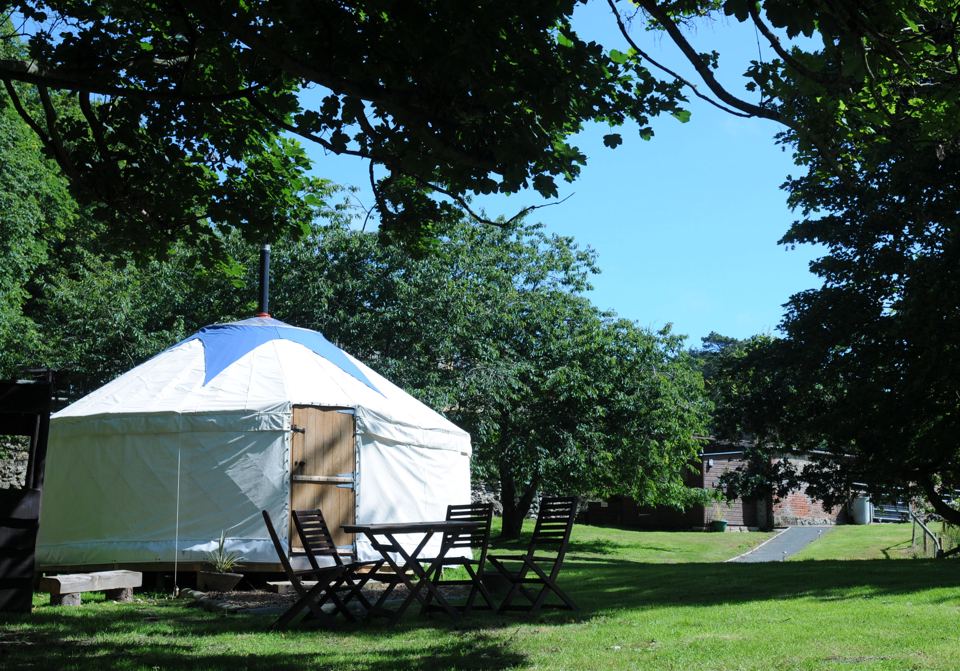
Glamping site · St Lawrence
Bank End Farm Yurts
Yurts
- No dogs
- Near beach
- Glamping
from £71.43/night
ViewThe rules on collecting
Much of the Island's fossil coast is protected for its geology and wildlife, and much of the land above Compton and Brook belongs to the National Trust. The rules come down to a simple code:
- Collect only loose material on the beach. Fossils lying in the shingle will be washed away by the next tide if nobody picks them up.
- Don't dig, hammer or prise anything out of the cliffs or the rock ledges. It's dangerous, damages protected sites, and needs the landowner's permission.
- Leave the footprints alone. They're for everyone.
- Take only what you need, and leave larger pieces for others to see.
- Report anything significant. If you find something large or unusual, such as an articulated bone or a skull, photograph it where it lies, note the place and tell Dinosaur Isle rather than trying to dig it out.
Tides and cliffs
The fossil beaches are also the Island's most dangerous ones to walk carelessly.
- Check the tide times before you go. At Compton, Hanover Point, Brook and Yaverland the sea reaches the foot of the cliffs at high tide. Start on a falling tide and turn back well before low water.
- Keep away from the cliff foot. The cliffs are soft clay and sand and fall without warning, especially after rain or frost. Most finds are on the open beach anyway.
- Watch out for mudflows. Wet clay at the base of the cliffs can be deep and sticky. Don't walk on it.
- Wear boots with grip. The rock ledges are slippery with weed.
Go after a storm, in the off season. The best fossil hunting is in winter and spring, after rough seas have stripped sand off the beach and brought down fresh cliff falls, and before summer crowds have picked the beach over. 21 campsites are open all year; see camping out of season.
What to bring: a small bag, a hand lens if you have one, tissue to wrap finds, a tide table and a phone for photos. For more ideas with children, see camping with kids, and for the beaches themselves, the best beaches near campsites.
Questions people ask
Where can I find dinosaur footprints on the Isle of Wight?
At Hanover Point, between Compton Bay and Brook in the West Wight, at low tide. They are natural casts, rounded three-toed lumps that filled the original prints. Footprint casts are also found on the foreshore at Yaverland near Sandown.
Am I allowed to keep fossils I find on the Isle of Wight?
Yes, if they are loose on the beach. Don't dig, hammer or prise anything out of the cliffs or the rock ledges, leave the footprints alone, and report anything significant to the Dinosaur Isle museum.
When is the best time for fossil hunting on the Isle of Wight?
At low tide, ideally after rough weather in winter or spring, when storms have scoured the sand and brought down fresh material from the cliffs. Always check tide times first.
Which campsites are closest to Compton Bay for fossil hunting?
Compton Farm is a short walk from Compton Bay, Chapelfurlong Farm at Hulverstone is within walking distance of Brook, and Tapnell Farm near Yarmouth is under two miles away.
Are there guided fossil walks on the Isle of Wight?
Yes. Dinosaur Isle in Sandown runs guided fossil walks, especially in the school holidays, which need booking in advance. Check the museum's website for dates.